What Does a Home Inspection Include? The Full Checklist for Atlanta Buyers

Buying a home comes with big decisions. A thorough inspection can help you understand the home’s visible condition before you move forward.
So, what does a home inspection include? A professional inspection is a visual review of readily accessible, installed components. It covers major systems and areas of the home, from the roof and foundation to plumbing and heating.
This home inspection checklist explains what buyers and sellers in metro Atlanta can generally expect. The exact scope depends on the property, access, the inspection agreement, and the inspector’s standards of practice.
A Clear Starting Point
A home inspection gives you a detailed snapshot of a home on inspection day. It is not a pass-or-fail test, a warranty, or a guarantee that every issue will be found.
We focus on what is readily accessible and visible. If a component is blocked, unsafe to reach, shut down, or concealed behind a finished surface, it may not be possible to inspect it. A good report will explain significant findings and note areas that could not be inspected.
Exterior and Site

Outside, an inspector looks at visible areas that can affect the home’s condition and how water moves around it. This may include:
- Exterior walls, siding, trim, and visible flashing
- Exterior doors and a representative number of windows
- Eaves, soffits, and fascia that can be seen safely
- Walkways, driveways, steps, porches, decks, and railings
- Visible grading, drainage, vegetation, and retaining walls near the home
The inspector may note visible deterioration, damaged materials, unsafe railings, or conditions that could allow water to reach the structure. This is not a boundary survey or a detailed evaluation of soil and drainage design.
Roof and Drainage
The roof review typically covers visible roofing materials, flashing, roof penetrations, and drainage components such as gutters and downspouts, where accessible. Inspectors choose a safe viewing method based on the roof’s pitch, condition, height, weather, and access.
That may mean walking the roof, viewing it from a ladder or eaves, or observing it from the ground. The report should describe how the roof was inspected. A standard visual inspection does not certify the roof or predict exactly how long it will last.
Attic, Insulation, and Ventilation
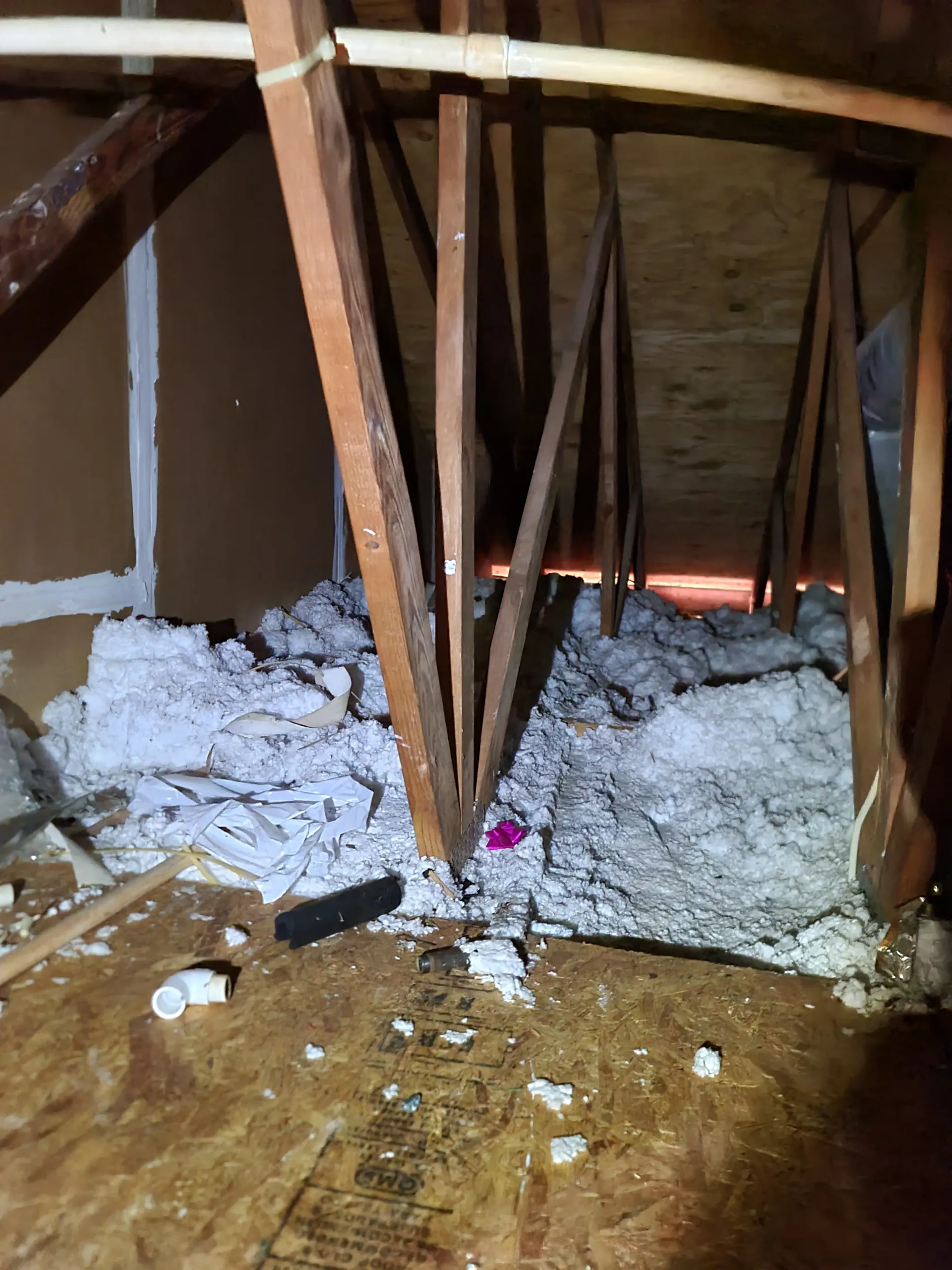
If the attic is safely accessible, the inspector may look at visible roof framing, sheathing, insulation, ventilation, and signs of moisture or leakage. Bathroom and kitchen exhaust ducts may also be observed where accessible.
An inspector does not need to move insulation or enter a space that is unsafe or inaccessible. Stored belongings, low clearance, or other obstructions can limit the view. If access is restricted, the report should explain what could not be seen.
Foundation and Structure
The inspector reviews visible portions of the foundation and structural components. Depending on the home, that may include the basement, crawl space, slab, support posts, beams, floor framing, and accessible roof framing.
They look for observable signs that may deserve attention, such as cracking, movement, moisture entry, or wood deterioration. A home inspection is not a structural engineering assessment. When a concern needs a closer diagnosis, the report may recommend evaluation by a qualified specialist.
In metro Atlanta, crawl-space moisture and signs of water entry are especially practical items to understand. The inspection can document what is visible on the day, but it does not guarantee future conditions.
Major Home Systems
Electrical
The electrical review generally includes visible service equipment and wiring, along with a representative number of switches, lights, and outlets. Where the inspector’s scope and safe access allow, testing may include certain ground-fault or arc-fault protection devices.
The inspector may report visible concerns such as damaged wiring, missing covers, or outlets that do not work as expected. The inspection is not a detailed electrical engineering review, and some components may not be tested if they are inaccessible, unsafe, or not operating.
Plumbing
The inspector looks at readily accessible water supply and drain piping, plumbing fixtures, faucets, toilets, and the water heater. Normal controls may be used to check basic operation, such as running water or flushing a toilet.
Visible leaks, corrosion, drainage concerns, or water-heater issues may be noted. Concealed pipes, water quality, private wells, septic systems, and some specialized equipment are typically outside a standard home inspection. Additional testing or a plumber’s evaluation may be appropriate when a concern warrants it.
Heating and Cooling
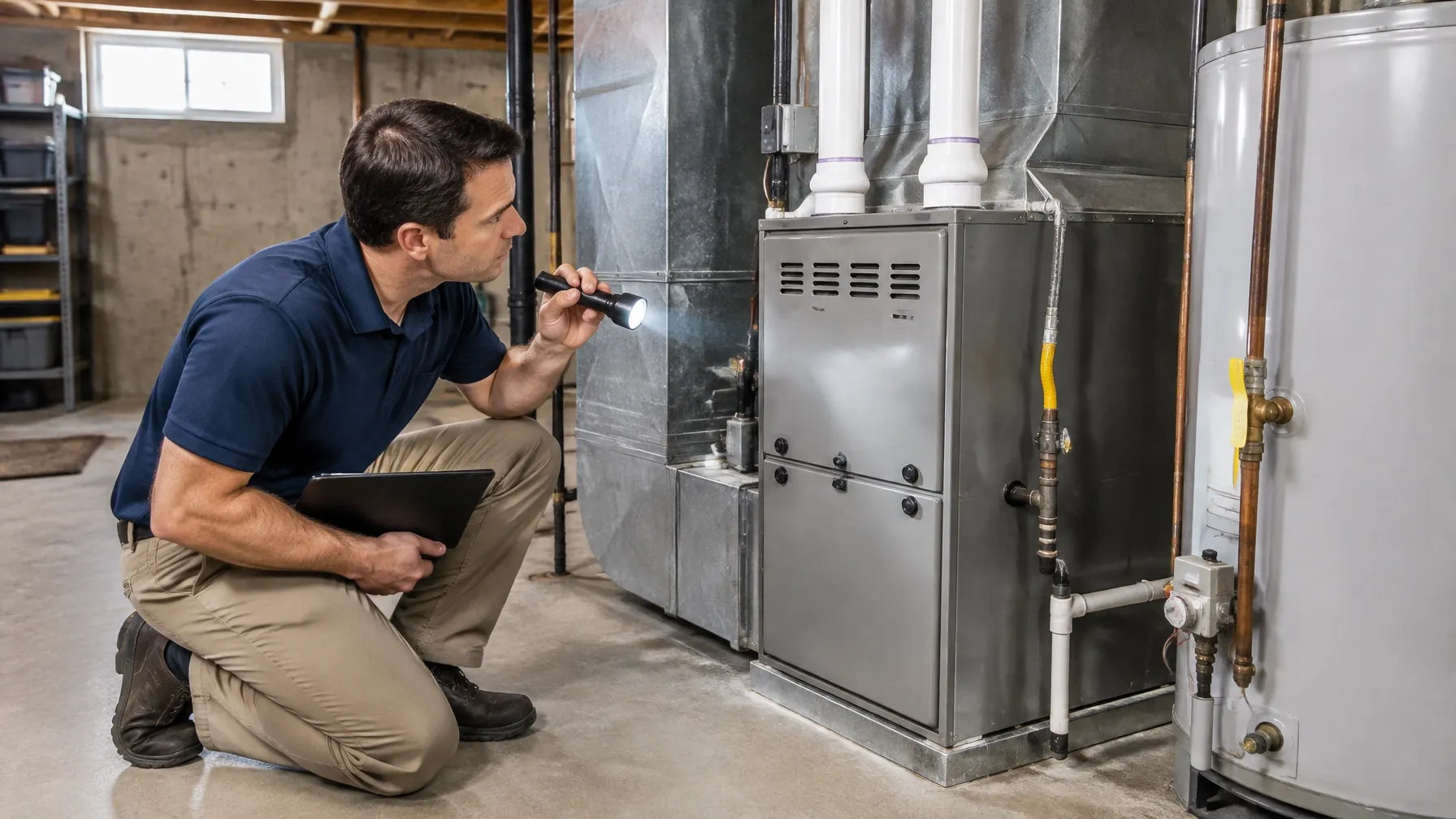
The heating and cooling review usually includes permanently installed equipment and accessible distribution components, such as visible ductwork. When conditions allow, the inspector may operate the systems using normal controls.
The inspection is a general condition check, not a full HVAC service appointment. It does not usually involve dismantling equipment, checking refrigerant, measuring every room’s performance, or predicting a system’s remaining life. Weather or other conditions may also make it unsafe to run some equipment.
Interior and Safety Features
Inside, the inspector reviews visible walls, ceilings, floors, stairs, railings, doors, and a representative number of windows. They may note visible water staining, damaged surfaces, sticking doors, or safety concerns.
Garage doors and their operators may also be included when accessible. Smoke and carbon monoxide alarms may be noted, but testing or evaluating alarm systems can vary by inspection scope. Personal belongings, rugs, and furniture are not moved to view concealed surfaces.
Built-In Appliances
Some installed kitchen appliances may be operated using their normal controls, depending on the inspector’s standards and agreement. This often includes checking the basic function of equipment such as a range, oven, microwave, dishwasher, or food-waste disposer.
That is not a full performance test. The inspector does not typically test every feature, determine remaining appliance life, or evaluate all freestanding appliances. Confirm appliance coverage with your inspector before the appointment.
What a Home Inspection Does Not Cover
A standard inspection is visual and non-invasive. Inspectors do not open walls, dismantle systems, move heavy belongings, excavate, or enter unsafe or inaccessible areas. Concealed or latent conditions may not be visible during the inspection.
Specialized services are also commonly separate. These may include mold testing, radon testing, termite or other pest inspections, sewer scopes, septic or well evaluations, and engineering assessments. If you have a specific concern, ask whether it is included or needs a separate professional.
For a clearer picture of scope, you can review the ASHI Standard of Practice and InterNACHI Standards of Practice. Your inspector’s agreement explains the scope that applies to your inspection.
From Findings to a Useful Report
A detailed report should help you understand what the inspector observed and what to consider next. It may include photographs, descriptions of concerns, and recommendations for repair, monitoring, or further evaluation.
Not every note means a major problem. Some findings are routine maintenance items. Others deserve prompt attention or a closer look from a qualified specialist. We aim to make our reports clear, transparent, and useful, not a list of unexplained technical terms.
At Griffin’s Quality Home Inspections, we are an independent small business serving Atlanta-area buyers, sellers, and homeowners. We are Certified and Insured, and same-day reports are available upon request. Our goal is simple: give you careful, detail-oriented information to support your next decision.
If you are comparing a home inspector in Atlanta or searching for a home inspection near me, start by asking about the inspection’s scope, report timing, and how follow-up questions are handled. You can explore our inspection services or contact Griffin’s to discuss your property.